
When the Old Leadership Paradigm Stops Working
Mar 09, 2026
Something that is coming up a lot in session (and in my personal conversations with friends) is how difficult work environments feel these days.
Systems are starting to crack.
Not all at once, and not always dramatically, but in quiet fractures that show up in everyday conversations. I hear it in the voices of my best friend and wife, both teachers who feel exhausted by expectations that continue to rise while support continues to shrink. I hear it in nurses who entered their profession to care for people and now find themselves navigating systems that treat them as replaceable labor. I hear it from people working in community mental health who are trying to hold enormous amounts of collective pain while their own capacity is stretched far beyond what is sustainable.

And I hear it in workplaces across industries where employees are quietly asking themselves a question many leaders seem unwilling to acknowledge:
Why should I give so much of myself to a system that sees me as replaceable?
At the same time these cracks are becoming more visible, many leaders are responding by doubling down on the tired, old leadership models that helped create the problem. The focus tightens around productivity metrics, quarterly earnings, and performance expectations. Teams are asked to “bring their best” and “stay positive,” even as the larger context of the world feels increasingly uncertain.
What is rarely spoken out loud in these environments is the level of collective anxiety people are carrying, the level of tension between the “haves and have nots.” People are worried about layoffs. They are watching industries shift rapidly. They are navigating a world that feels politically, socially, and economically unstable. And yet in many organizations there is little room to name these realities. Instead, people are expected to quietly absorb the pressure and continue performing as though nothing has changed.

When leaders ignore the emotional reality of their teams, something important erodes. Trust weakens. Motivation fades. The sense of shared purpose that once held teams together begins to unravel. People start doing the bare minimum not because they are lazy, but because they no longer feel seen as human beings inside the system.
In this moment of collective turning, leadership models built only around control, productivity, and the bottom line are reaching their limits.
Systems Rely On The Collective Trauma Response of People-Pleasing
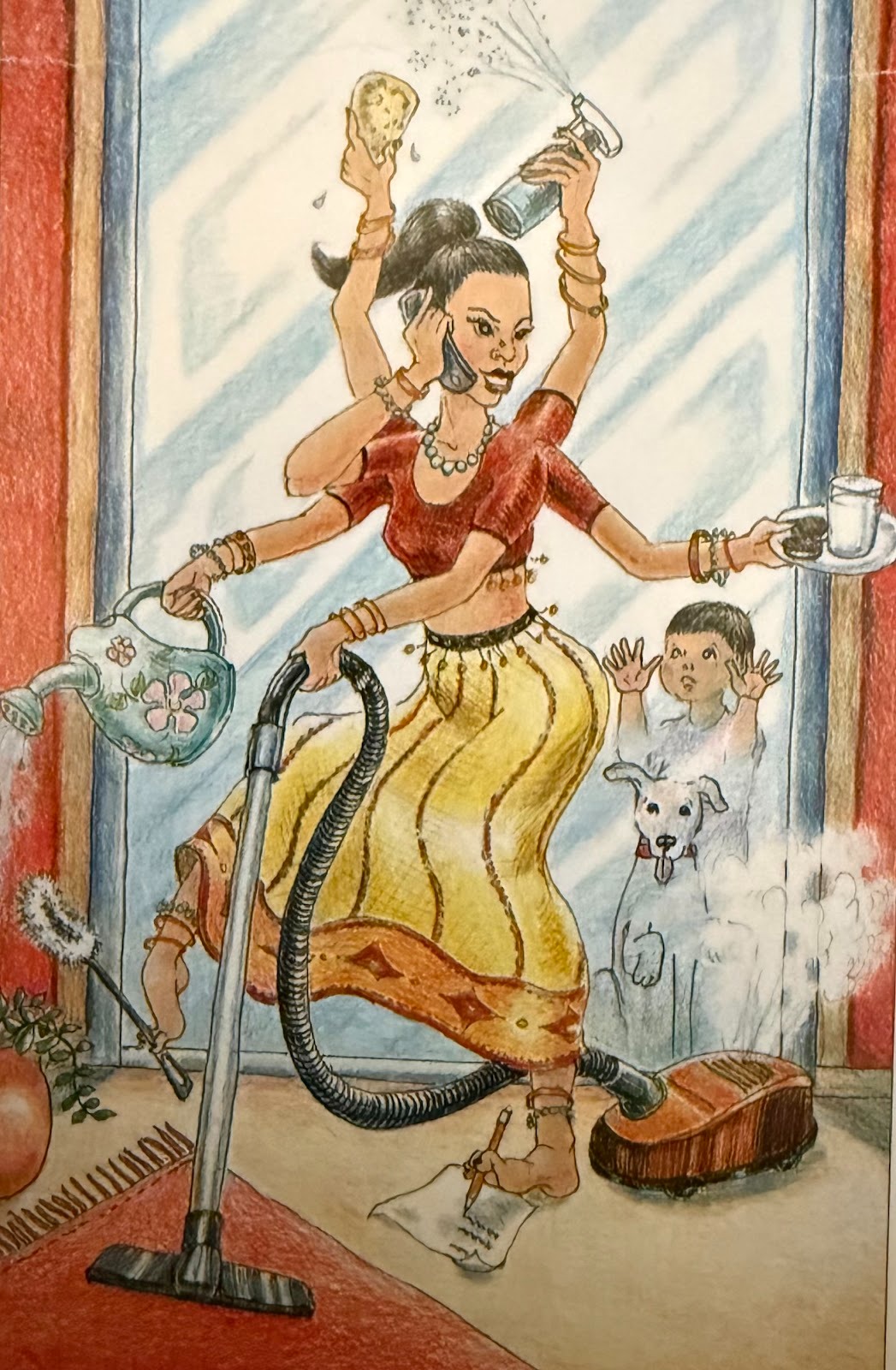
Nowhere is this more visible than in professions that were built on what we might call the collective martyr response. Fields like nursing, teaching, and community mental health have historically relied on people—often women—who were socialized to be endlessly giving. To say yes when they were exhausted. To take on more responsibility than was reasonable. To sacrifice their own well-being in service of others.
These systems have quietly depended on people-pleasing, over-functioning, and self-sacrifice to keep them running.
For a long time, this "worked."
But it was never sustainable.
Burnout is not simply a personal failure to cope. In many cases it is a rational response to systems that were never designed with human limits in mind. Often, it isn't really burnout, but moral injury. There is no amount of "self-care,"- bubble baths, meditation, free subscription to the "calm app"- that is going to make 40-student classrooms and 100-client caseloads ok.
As these systems strain under the weight of their own design, leaders are facing a choice. Some will continue to tighten control, demand more productivity, and treat human beings as resources to be optimized. Others will recognize that this moment requires something different.
The leaders who will endure in this next chapter are the ones willing to practice a new paradigm of leadership. This does not mean abandoning accountability or ignoring financial realities. It means expanding the definition of leadership to include the emotional and relational realities of the people inside the system.
New Paradigm Leadership
New paradigm leadership requires the courage to name what people are actually experiencing. It requires leaders who are willing to acknowledge the uncertainty of the moment rather than pretending everything is stable. The “Nothing to See Here” approach is not working. And it requires an understanding that human beings function best in environments where they feel respected, valued, and connected to a meaningful purpose.
Leading from the heart is sometimes misunderstood as being soft. In reality, it demands far more courage and self-awareness than many traditional leadership models require.
People are craving something real. People are craving directness, honesty, not shitty news wrapped in corporate jargon and vague language. I had a teacher friend of mine tell me how her school had to let two teachers go due to budget cuts and the principal wouldn’t even say their names and instead called them by their departments. Gross.
We are living through a significant collective, turning point. Many of the systems that structured the last century were built on extraction—of labor, of energy, of human capacity. In my book Always Enough, Never Done, I write about the deep conditioning many of us carry to keep giving, producing, and proving our worth, often long after our bodies and nervous systems have reached their limits. That conditioning did not arise in a vacuum; it was reinforced by the systems we work within.
But those systems are beginning to reveal their fragility.
The question now is not whether change is coming. The question is how leaders will respond when the old ways of operating no longer produce the results they once did.
Some will attempt to hold the old structures together with tighter control and higher expectations.
Others will begin the more difficult work of reimagining leadership itself—leadership that makes room for the full humanity of the people within those systems.
Because systems that ignore the realities of the human nervous system, the need for belonging, and the weight of collective stress cannot remain stable indefinitely.
Eventually the people within them burn out, opt out, or begin demanding something different.
In many places, that shift has already begun.
I have no doubt that something better is coming. What this moment asks of us—especially those in leadership—is not perfection, but courage. Courage to pause, to listen, to name what is actually happening rather than pretending everything is fine. The systems that will endure are the ones willing to evolve toward something more human: workplaces where people are not treated as expendable resources but as living, feeling contributors to a shared purpose. In times like these, leadership is no longer just about strategy or performance. It is about the willingness to help create environments where people can remain human while doing meaningful work.